Wednesday, April 8, 2020

Housebound

OK, it'd be one thing if I were making an extremely rich carbonara for a second course at a dinner party, and serving it with like a skin-contact grenache blanc that tastes of sweet tea with lemon.  But in any other circumstance, pasta carbonara is a weeknight meal, and I have some rules for carbonara on a weeknight.

  • I won't separate eggs, because I'll never use the whites, and it seems wasteful to throw out egg whites for any end other than making ice cream.
  • No pork, because pigs are smarter than dogs.

This takes off the table things like Serious Eats's pasta carbonara, which uses 2 eggs, 6 yolks, and a very specific cut of fatty pork.  To me, pasta carbonara is one of the most rustic dishes, and since I don't use egg whites to prepare meringues or starch shirts, I'm not going to just toss out edible food on a weeknight.

Another thing I've never quite gotten about pasta carbonara--I guess with a yolky recipe, you can magically toss the hot pasta directly with the eggs and scramble them instantly, but I've never been able to achieve this near-magical rate of heat transfer in real life.  I cook the pasta for a little bit together with the eggs.  I'm sure this would get a negative reazioni from actual Italian chefs, but, honestly, it works for me, and the result is great.  It's just the right balance of simplicity to be accessible any night of the week, and technique to make you feel like you're caring for yourself.  I am a millennial.

--

Weeknight carbonara
serves 2-3, easily doubles to serve 4-6

2 tbsp olive oil
3-4 cloves garlic, minced
8 oz dried spaghetti
3 eggs
2 oz pecorino romano cheese, grated (parmesan also OK)
lots of black pepper, in a grinder
salt

Bring about 2 quarts of water to a boil over high heat.  While the water is heating, add a couple big pinches of salt, maybe a tablespoon total.

While the pasta water is coming to a boil, heat the 2 tbsp olive oil in a large pot or pan over medium-low heat and add the garlic, along with lots of black pepper (I'll use about 20 grinds).  Cook for about 1-2 minutes, until the garlic is starting to soften but is not at all brown.  Add a small scoop of water from the pasta, about 1/4 cup, to stop the cooking, then turn off the heat.

Crack the 3 eggs into a bowl and beat well.  Add most of the pecorino cheese, leaving a little behind to top the finished dish.  Season with a good pinch of salt and another 20 grinds or so of black pepper.  Add the eggs to the pan with the garlic and oil, still without any heating.

When the water has come to a boil, add the pasta, stirring it around to get it all under the small amount of water. Cook according to package directions, stirring once or twice to break up the strands.  Grab another 1/4 cup pasta water from the pot as the pasta is cooking and sprinkle it into the pan with the egg/garlic mixture.

When the spaghetti is cooked, turn off the heat, grab it with a pasta tool, and transfer it over into the pan with the egg mixture.  Turn the heat on medium in the pan with the egg and pasta mixture and cook it, stirring continuously with a pasta tool.  It will start off soupy and make an unpleasant bubble-popping noise when you drag it around.  Continue cooking over medium heat, stirring vigorously until the egg mixture is no longer soupy.  At no point should the eggs start to curdle on the bottom of the pan.  When you pick up a spoonful of the pasta, almost nothing should drip down off the pasta back into the pan.  

Once you've gotten it to the egg mixture close to the texture you want, turn off the heat and let the pasta sit for ten seconds, then ladle into a shallow bowl.  If any lightly scrambled eggs remain in the pan, top them onto the pasta.  Top each bowl with additional romano cheese and black pepper.

Tuesday, September 12, 2017

Yeah, delicious corn

I keep forgetting how to make corn chowder, so I've been referring to this corn chowder recipe that I've had sitting half-finished in my blog drafts for over 4 years now.  I keep having to guess at what the other half of the recipe is based on the ingredients list, so I figured that today might be a good day to sit down and finish it.

I had some text written about fresh corn and cooking with the seasons and blah blah blah San Francisco but I heard that people don't want stories on food blogs anymore, they just want recipes.  I guess I blame millenials for also killing writing.  And food--we just subsist on Instagram likes and self-doubt.  Guys, let's keep corn around for at least a generation or two more, because it's great.

--

Corn chowder
Serves 4-5 with crusty bread

2 tbsp olive oil
2 tbsp butter
1 yellow onion, diced, about 1 cup
2 small hot peppers, seeded and sliced thin
3 tablespoons flour
about 2 cups waxy potatoes (about 4-5 yukon gold, or a bunch of fingerlings)
4 ears corn
1 quart milk
kosher salt

Add the olive oil and butter to a skillet and warm over medium-low heat until the butter is melted.  Add the diced onion, hot peppers and several large pinches of kosher salt.  Cook over medium-low heat, stirring frequently until the onion is soft, suffused with fat, and not at all astringent--about 10-15 minutes.  Add the flour and cook for another 2-3 minutes.

While the onion mixture is cooking, slice the kernels of corn off of the cobs and cut the potatoes into 1/2-inch pieces.  Add the corn and potatoes to the onion mixture and cook for another 1-2 minutes.  Add all the milk, stirring as you add it to make sure that all the flour mixture is incorporated and doesn't clump up.  Add a couple more big pinckes of salt, bring to a simmer, drop the heat to medium-low, and cook until the potatoes are tender, another 15-25 minutes depending on the kind of potato you used.  Serve with snipped chives and crusty bread.

Monday, February 6, 2017

Aaaack

You know, I've always said--tomato salads are my all-time favorite food, but something bad happens every time I make tomato salad. One time, Jeff was unexpectedly called away to handbell rehearsal, delaying dinner by a couple hours. Another time, I found out that my friend was in a car crash. And one time, I found out that Giada De Laurentiis got divorced.  But, still, nothing seems to compare to the tomato salad that I made during the first presidential debate last year.

It was, by far, the greatest tomato salad I have ever made, a perfectly elegant combination of familiar ingredients, the synthesis of a few different recipes I'd enjoyed. It was easily one of the top five meals I had last year, a healthy vegan delight decadent enough to convert an omnivore.  t was the only thing I could do to take my mind off presidential politics for a few hours in September.  And, well, here we are now.


So I'm not even going to say anything to jinx this pancake recipe. Here's a recipe for pancakes and I think we can all agree that there is absolutely nothing negative about pancakes.

--


Tahini pancakes

Makes 6 large pancakes, serving 2-3
(easily doubled)

Adapted from 101 Cookbooks' master pancake recipe

1/4 cup sesame seeds
1 1/4 cups whole wheat flour
1/2 tsp baking powder
1/2 tsp baking soda
1/4 cup granulated sugar, unrefined if possible
1 tsp salt
1/2 cup sesame tahini
1 1/4 cups milk or buttermilk, plus up to 1/2 cup extra
2 large eggs, beaten
olive oil
cocoa nibs (optional)

Place the sesame seeds in a small non-stick skillet without oil and toast over medium-high heat, shaking frequently, just until they become fragrant and begin to pop. The timing will depend on the stove and pan you are using, but this could take anywhere from 30 seconds to 2 minutes. Remove from the pan and let cool.

Mix together the flour, baking powder, baking soda, sugar, and salt in a large bowl and whisk a few times to mix. Pour the tahini, milk, and eggs on top of these dry ingredients and whisk until just combined. Add the sesame seeds and whisk once or twice to distribute them evenly. Lift up a spoonful of the batter--it should have some body, but still flow easily off of a spoon. The texture will depend somewhat on the consistency of your tahini.  If the batter is too dense, whisk in a little milk, splash by splash, until you've got a nice, flowing batter.

Heat up 1-2 tbsp of olive oil over medium-high heat in a large skillet--I use two cast-iron skillets over two burners. Drop in a large spoonful of batter and let it spread out in the pan. If you're feeling decadent, drop some cocoa nibs over top of the batter while it's still runny. Once some bubbles begin to poke through the top of the batter, flip the pancake and cook for up to a minute on the other side, so that it's puffy and cakey but not dried out. Keep your pancakes warm and stacked in the oven while you prepare the rest.

Monday, September 26, 2016

Life, it's bigger

Yeah so I feel like the presidential debates might literally determine whether humankind exists in 50 years or not, so watching them has been a bit of a stressor for me.


I made this tomato salad during the first set of presidential debates, and I have to say that it was overall a calming experience.  My high school health teacher might have called it a source of eustress.  Now, I'm not all vegan vegan vegan these days, but I have to say that this combination of crunchy almonds and nutty-sweet sunflower sprouts worked together to give the whole dish the character of a BLT, without any meat or dairy.  Next time, a few sprinkles of smoked salt and brown sugar might be welcome.

--

Tomato salad with sprouts and fried almonds
Serves 3-4

2-3 lbs tomatoes, ideally a mix of some heirloom and some cherry
a bunch of scallions, sliced and separated into whites and greens
1/2 cup (4 oz) almonds
4 oz sprouts (e.g., sunflower, bean, clover), washed and dried
olive oil
kosher salt
black pepper

Slice the tomatoes into rough chunks, about 3/4" - 1" in size.  Halve any cherry tomatoes.  Toss them with a few large pinches of salt and let sit for 20-30 minutes while you prepare the rest of the dish.

Add 3-4 tbsp olive oil to a pan and set it over the lowest heat setting possible on your stove.  Add the sliced whites of the scallions, with a few pinches of salt.  Cook over low heat, shaking occasionally, until slightly browned, around 10 minutes.  Pour the scallion whites and their oil into a small jar.

Add another 1-2 tbsp olive oil to the same pan.  Roughly chop the almonds and add them to the pan, still over low heat.  Cook, shaking every 2-3 minutes. until the almonds are lightly browned, about 5-10 minutes.  Season with kosher salt and black pepper, then pour into a small bowl.

Pour any reserved juices from the tomatoes into the same jar as the scallions and their oil, then add 4-5 chunks of tomato.  Using an immersion blender, puree until a thick dressing is created.

Toss the sprouts together with the marinated tomatoes, almonds, scallion greens, and the dressing.  Serve with a few pieces of toast rubbed with garlic.

Saturday, December 5, 2015

Since U bean gone

Alright, so it's Thanksgiving, your 36-pound turkey is out of the oven and you've placed it directly into the refrigerator for leftovers, as I suggested.  Still, you're in need of something to cut through the intolerable richness of leek bread pudding, mashed potatoes mounted with garlic butter, and cauliflower gratin.  It needs to be green.  And, honestly, neither endive with hot bacon dressing nor brussels sprouts fried in olive oil are going to hack it.


Somewhere along the line, America developed this idea that you need to stew green beans into silky submission on Thanksgiving, then top them with something deep-fried to restore their crunch.  No!  Crisp, snappy beans are just fine, and contrast perfectly with everything else in your typical spread.  In the past, I've taken blanched beans and glazed them quickly in butter, then added some dill or mint to brighten them up. This year, I decided to go even lighter, and improvised a new, Chinese-inflected take.  In the interest of time (and stove space), I tossed the cooked beans in a caramelized fennel vinaigrette, then scattered some roasted persimmons among them.  To serve, I just warmed the casserole through, then topped it with roasted sichuan peppercorns.  Crunchy, fresh, and packing just enough peppery heat to wake you up in the middle of dinner--these beans will be back next year. 

--

Green bean casserole with fennel and persimmons
Serves 8+ as a side

This is truly a casserole for celebrating Thanksgiving in California, perhaps the only time and place where one can credibly serve green beans and persimmons together.  If you're making it elsewhere, or at the height of summer, you could substitute under-ripe peaches for the persimmons.  I've also thought of this dish as playing a great supporting role at to a vegan Thanksgiving--also an institution unique to California.

3 pounds green beans, stemmed
5 medium fuyu persimmons, about 1-1.5 pounds
2 medium shallots, about 4 oz
2 bulbs fennel with stalks, about 1 pound
1 tbsp soy sauce
1 tbsp zhenjiang vinegar (or balsamic vinegar)
1 tbsp sugar
3 tbsp sichuan peppercorn (optional)
Chili powder
Kosher salt
Olive oil

Blanch green beans:  Bring a pot of salted water to a rolling boil, and prepare an ice bath while the water is heating.  Blanch the green beans for 2-3 minutes, until they are a vibrant green and just crisp.  Drain the green beans and plunge immediately into the ice bath until cool.  Remove the green beans in the ice bath and set aside to dry.

Caramelize fennel:  Remove the fronds from each fennel bulb and discard.  Separate the stalks from the bulbs and slice the stalks thinly.  Separate the tough outer ribs from each fennel bulb.   Retain the inner part of the bulb for marinated fennel, below.  Slice the outer ribs and stems thinly.  Halve each shallot, remove the skin, and slice thinly.  Add the sliced fennel and shallots to a small saucepan along with 4 tbsp olive oil and a pinch of salt.  Cook over low heat, covered, until lightly browned and caramelized, about 30-40 minutes.  Add the soy sauce and vinegar and cook for another 5 minutes to concentrate the flavor, then remove from the heat.

Meanwhile, marinate reserved fennel:  Remove the tough inner core from each retained fennel bulb and discard.  Slice the bulbs as thinly as possible, then toss with kosher salt to taste.  Allow to marinate for 20-30 minutes while preparing the rest of the dish.

And roast persimmons:  Slice each persimmon into 8 pieces, then toss the slices with 2 tbsp olive oil, a few pinches of salt, and chili powder to taste.  Roast in an oven preheated to 400 °F until tender but not falling apart, about 15-20 minutes.

Assemble casserole:  Mix together the blanched green beans, caramelized fennel, marinated fennel, and roasted persimmons in a large bowl, then turn the entire contents of the bowl into a casserole dish.  In a small skillet over medium heat, toast the sichuan peppercorns until fragrant, about 1-2 minutes, then grind them in a mortar and pestle and sprinkle over the casserole.  The casserole will keep for 1-2 days covered in the fridge.  To serve, heat just barely through--about 10 minutes in a 350 °F oven.

Friday, December 4, 2015

How about a carrot?

I'm the kind of Thanksgiving celebrant who's all about the side dishes--you can brine, dry, spatchcock, and deep-fry your bird all you like, but I'll be over in the corner defrosting my stuffing and my green beans, unpacking my pies and my ice cream.  At mealtime, I'll load up my plate clockwise with every available casserole and mashed vegetable, then drop a small slice of dark meat in the center and call it a day.  Strangely enough, I do like having leftover turkey around the house:  I folded the last of this year's model into a nice tortilla soup just last night.  My plan for next year is to 1) stay up for four nights making sides; 2) roast a 36-pound turkey; 3) put it in the fridge; 4) just make everyone eat the sides instead.


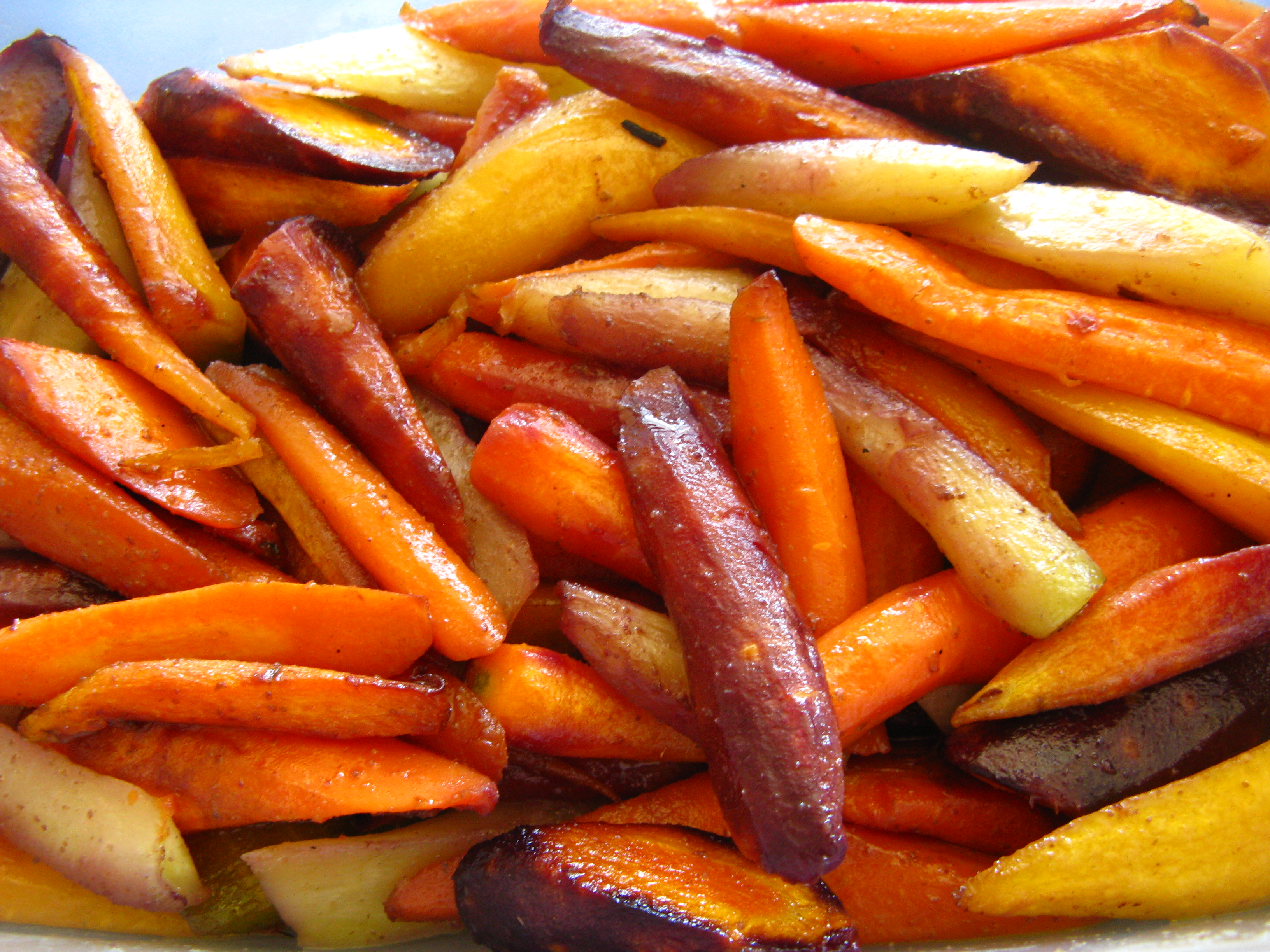
So, this year, finding ourselves invited to a small potluck, of course I signed us up to bring every side dish imaginable.  Over the years that Jeff and I have been hosting or contributing to Thanksgiving in some capacity, I've developed a respectable repetoire of recipes.  Out of all of them, I think I've received the most positive feedback about this carrot and wild rice stuffing, which I've been making for three years straight.  Honestly, this shouldn't come as a huge surprise, because it's an unashamed knockoff of a recipe from the much-lauded Eleven Madison Park in New York, a restaurant whose downscale cousin The Nomad served me my favorite meal of 2015.  I don't call for you to submerge the carrots in a full pint of rendered duck fat, like they do in their recipe, and I don't charge $225 to taste it, like they do in their restaurant.  Still, the final result, with deeply rooty carrots playing against warm cumin and sweet dates, is worth the effort.

--


Wild rice stuffing with carrots, duck fat, and cumin
Serves 8+ as a side dish

Although the main element of this dish is carrots roasted in duck fat, it could easily be made vegetarian by substituting brown butter, or vegan by using coconut oil.  Another option that's on my list for next time is to make it with olive oil and then actually stuff it into a duck as it's roasting.

3 pounds colorful carrots, sliced into assorted 1-inch pieces
3 tbsp duck fat
1 1/2 cups wild rice
1/2 cup medjool dates, pitted and sliced into 1/2 inch pieces
1 tbsp ground cumin
1 tbsp cumin seeds, or more to taste
zest of one small meyer lemon
a bay leaf
a branch of thyme
kosher salt

Roast the carrots:  Preheat the oven to 400 °F.  Toss the carrots with 2 tbsp duck fat, 1 tbsp ground cumin, and a few large pinches of salt.  Roast the carrots, shaking the pan every 5-10 minutes, until they are tender and sweet but still retain some texture, about 20-30 minutes total.

Cook the wild rice:  Melt 1 tbsp duck fat over medium heat in a small saucepan.  Add the wild rice and toast for about 1 minute, stirring constantly.  Add 3 cups of water, a few large pinches of salt, the bay leaf, and the thyme.  Bring to a boil, reduce the heat to low, cover the saucepan, and simmer until cooked, anywhere from 30-90 minutes depending on the variety of rice used.  Add more water if the rice runs dry.

Assemble the stuffing:  Toss together the roasted carrots, the cooked wild rice, the chopped dates, and the lemon zest.  Turn into a casserole dish and sprinkle the cumin seeds over top.  The casserole can be stored, covered, in the fridge for a day or two.  When ready to serve, heat the casserole through, about 20 minutes in a 350 °F oven.

Monday, June 9, 2014

It ain't easy

Every time Jeff and I have anyone over to our house, I say to myself:  This is the one.  This party is going to be logistically easy and stress-free, and I'm just going to lay back and enjoy it.  I will not wake up at 8 AM for this party.  I don't need to bake fresh chocolate chip cookies halfway through this party; I don't need to stock the pantry with five kinds of brown liquor for the hot toddies; I don't need to shop at four separate grocery stores.  I will pare this party down to its barest essentials.  I will slice things off this party until it's just a fun-loving skeleton.


Fast forward to noon on Memorial Day this year and Jeff is slowly smoking two dozen chicken thighs on our little inherited Weber grill, and I've been up for five hours cutting up fruit for the vanilla-nectarine sangria.  You know, it was easier than other recent events at our house have been.  Unlike Labor Day, I didn't make twelve square feet of corn bread.  Unlike Christmas, I didn't have three sheets of compost cookies hanging out in the freezer overnight.  And unlike Thanksgiving--well, unlike Thanksgiving.


This gathering was really almost impromptu, conceived over a pig roast just a week prior, so we kept the guest list down to a mere 20 people.  Of course, because my job is scaling up chemical processes, throwing a small-scale barbecue just seemed like an invitation to make things that don't scale up well, like grilled focaccia with morels and green garlic.  Grilling bread is totally my new thing--at least, until summer hits San Francisco and it's too cold to grill.  I know what you're thinking:  no, it doesn't fall through the grate.  And yes, it is great.


Among the too-many things we made, though, this potato salad was definitely the lifesaver.  A huge cold dish that's easy to prepare and ready to go directly from the fridge, as a party dish it's hard to think of anything better.  While I make do make quite a three-bean salad, it's this potato salad that's going to be making a repeat appearance at every future barbecue from now until the next potato blight.

Inspired by Heidi's incredibly complicated salt and vinegar potatoes, which we made on the grill just a week prior and inexplicably decided to forgo at this barbecue, this salad hits just the right notes of sharp tang and cooling herbaceousness to cut through any heavy barbecue dish that you might make.  It's just about perfect as a side dish, and hearty enough to fill up any vegans that stop by too.

--

Vinegary potato salad
serves 15-20 as a side

5 pounds yukon gold potatoes
white vinegar (up to 1 quart)
kosher salt
white sugar
1 bunch (5-6) scallions
2 tbsp mustard seeds (yellow or brown; I used a 50:50 mix)
1/2 cup olive oil
1 bunch dill, picked or chopped into small fronds

Slice the potatoes lengthwise into 1/4 - 1/2-inch thick slices.  Place in a large pot and cover with a mixture of half white vinegar and half water (depending on the shape of your pot and potatoes, you may need quite a bit of vinegar).  Add a few very heavy pinches of salt to the water.  Bring the water to a simmer and cook the potatoes in barely simmering water until just tender.  Be careful not to let the water boil too heavily, or the potatoes could disintegrate.  Drain the potatoes in a colander and set them aside.

Meanwhile, slice the scallions very fine and toss with a mix of kosher salt (1 tbsp) and sugar (1 tsp) to taste.  Set aside and let marinate.

Toast the mustard seeds in a skillet with no oil over high heat until they just begin to pop (about 10-20 seconds), then remove the skillet from the heat and add the olive oil to the skillet.  Set aside and let infuse.

Once the potatoes have cooled completely, finish making the salad.  If the scallions have exuded any liquid, mix it in with the mustard-seed-infused olive oil.  Toss the scallions in with the potatoes, then pour the olive oil over the salad and toss to combine.  Top with dill to taste, then toss again.

Sunday, December 8, 2013

Five years

On Friday night, Jeff and I celebrated five years of knowing each other with a trip to local gem Frances, which once again exceeded expectations:  clams baked in cream, seared cod balanced against the bitter crunch of romanesco, midnight-black chocolate cake studded with pears.  We'd been planning to grab a cocktail in the neighborhood beforehand, but, as Bowie once sangit was cold, and it rained, so I felt like an actor.  Honestly, I think we make better cocktails at home than anywhere I that I would want to walk on a rainy night anyway, so we mixed up a few aperitifs while we were peeling out of our wet biking gear and making ourselves presentable for dinner.  Jeff, as always, went for a boulevardier, while I decided to put a kettle on the stove, knowing that any drink I was going to make at this point would require hot water in some capacity.  I've been going through a Terroir gin phase recently, and having recently read an article about tempering gin with applejack, I wanted to see if I could do some sort of a warm riff on a Pink Lady with those ingredients--maybe sort a cross with a hot toddy.


I usually load my hot toddies with a Dutch trading vessel's worth of spices--eight inches of ginger root, a handful of cloves, a few sticks of cinammon, and some sichuan peppercorns for mouth-numbing good measure.  They're delicious drinks, and they'll warm you up fast, but at the end of the day you really can't tell what kind of alcohol they're spiked with, be it bourbon, rye, cognac, or even hot buttery rum.  Really, you could probably pour a fifth of Nyquil into one of my hot toddies and it'd taste about the same.

This time I decided to take more of a spirit-forward approach, dialing down the extra flavorings to only a pod of anise and a sprig of thyme, and accenting the drink with just a dash of honey and lemon.  The bracing pine aroma of Terroir took on a totally different character while warm, and enveloped in the richness of applejack, it actually didn't seem too unusual for a warm drink.  Comforting but not rustic, nutty yet slightly savory, this is one of my best drinks I've made in recent memory.  Stuck on my eyes; what a surprise.

--

Five Years

1 oz. Laird's bonded applejack
1 oz. St. George Terroir gin
0.5 oz. lemon juice, strained (about half a lemon)
0.5 oz. honey (about 1 tbsp)
a one-inch sprig of thyme
one star anise pod
4-5 oz. boiling water, plus extra to warm the glass

Fill a mug or sturdy glass with hot water and let it sit for 30 seconds to warm it.  Pour out the hot water.  Add the applejack, gin, lemon juice, honey, thyme, and star anise to the mug, then pour the 4-5 oz. boiling water over top.  Stir, taste, and add a little more honey if necessary.  Sip. 

Thursday, July 4, 2013

Nowadays

It's really amazing to me that in one of the first entries I wrote on this blog, I quoted the song When You Smile, an ode to coalescence written by The Flaming Lips: "all of the subatomic pieces come together and unfold themselves in a second; every single molecule is right." Because, really, when I started this food blog three years ago, my life was a goddamn mess, and I was only writing about food in order to prove to myself that I could exert control over at least some small aspect of it (are there other pretexts under which food blogs are started?).

Everything has been going really well lately. Everything actually is coalescing. Everything actually is coming together--in my career and in my apartment and in the knitting of my bones.  Of course, I've been hit by enough cars in the past three months to know that I shouldn't take anything for granted. I work at a startup that's situated on landfill, so I could theoretically wake up tomorrow and find that my employer has sunk either into bankruptcy or into the San Francisco Bay. So I just wake up early, and I work hard, and I hope that things will keep going well, and I keep emergency rations in my closet, and I watch for illegal right turns. It's impossible to tell how long I'll be able to keep this up--but, oh, it's heaven nowadays.


Cooking has also felt different lately. I actually can't remember the last time I cooked something that didn't turn out well. Even better, I'm starting to feel a new sort of fluency in the kitchen. I used to really make a plan before I started in on a new recipe. Now I just sort of go by instinct and muscle memory, relying on a sense of how ingredients work and how to put them together.  I'm not sure exactly what happened--maybe I leveled up in a few cooking techniques during my months of gainful unemployment, or maybe an absence of other distractions in my life has freed up some mental bandwidth for working in the kitchen. Regardless, I've got a new sense of freedom when I'm cooking, and it's kind of playing well into the general mood that I've got going on in my life.


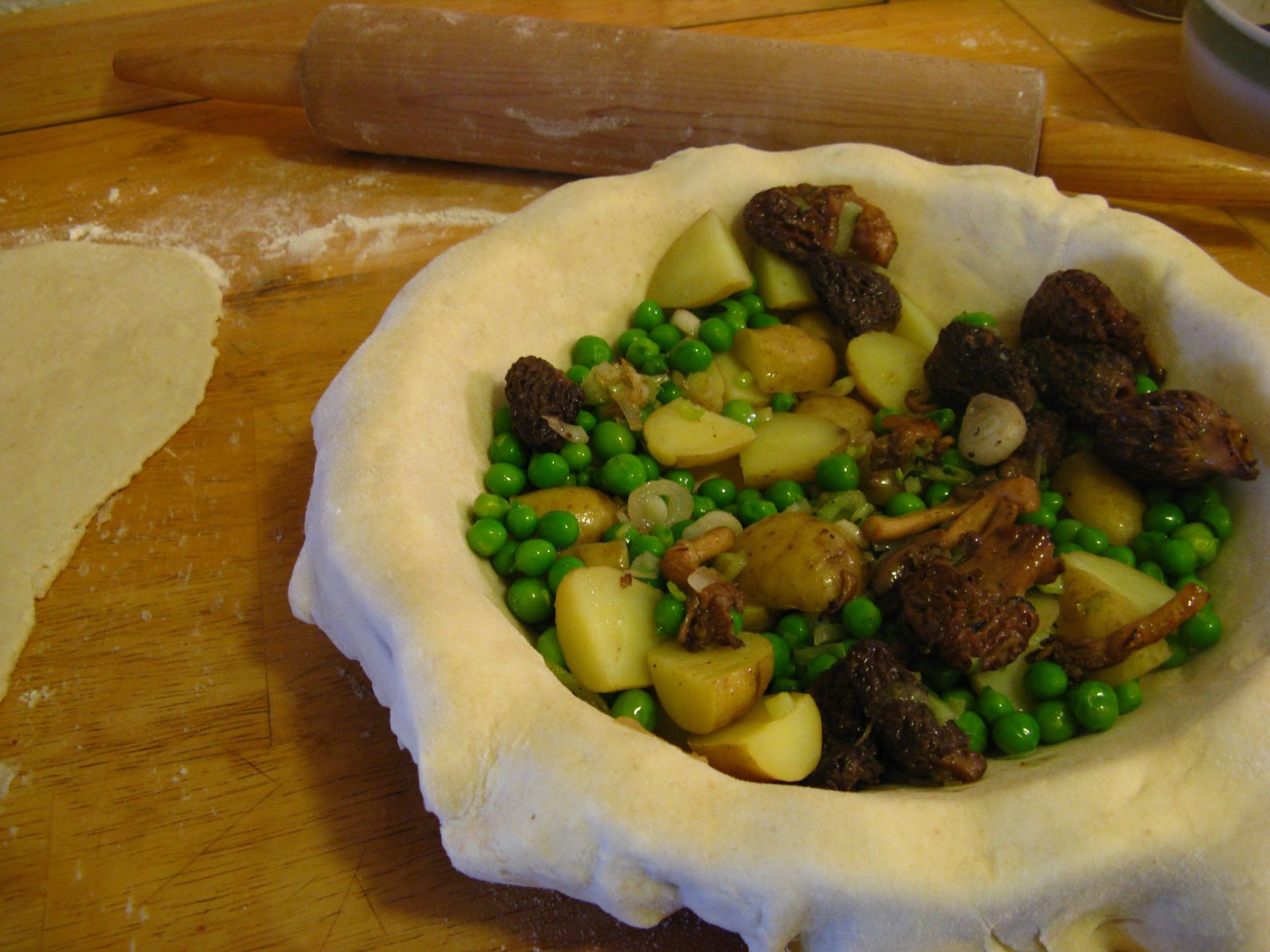
I made this morel pot pie for a casual dinner party that Jeff and I hosted on the last Monday of May as an excuse to invite over a pun-loving friend for Me-morel Day (are there other pretexts under which dinner parties are hosted?). I wrote down the recipe over a month ago, and I've spent the past few weeks stuck trying to think of something else to say about it. Now it's July, it's a new great American holiday, and we're in the middle of a heat wave all across the country, so morels aren't really thriving anymore. How did it get to be summer? How am I seeing cherry tomatoes and cucumbers already? I had been looking forward to posting about spring and fava beans and rebirth, poached eggs and corpse revivers. I watched for the longest day of the year and then missed it.


So I got behind. So what? There will be more asparagus next year, more bean salads to describe in excruciating detail, more grapefruits and fresh peas in April, more artichokes to contemplate. For today, nothing says America like pot pie. And maybe nothing describes my life better than this recipe for one.

--

Morel pot pie
serves 4-6, with a salad

for the pie crust
2 1/2 sticks of butter (10 oz, 20 tbsp)
2 1/2 cups flour (18 oz)
1 tbsp salt
about 1 cup ice water

for the pie
5 tbsp butter
3 tbsp flour
3 cups milk
1 cup fresh peas, shelled (from about 2 pounds of English pea pods)
1 1/2 pounds fingerling potatoes, cut into 1-inch chunks
1/4 pound morel mushrooms, washed well
1 tablespoon fresh thyme leaves, plus a few extra sprigs
2 tbsp dry vermouth
1 bay leaf
1 egg, beaten
peanut oil
kosher salt
black pepper

Make the pie crust. Cut the butter into small pieces (40 or so) and chill it in the freezer for 5-10 minutes while you measure out the flour and salt into the bowl of a food processor fitted with the blade attachment. Add the butter to the food processor and pulse 5-10 times, until the mixture resembles sand with a few larger pebbles in it.  Sprinkle 10 tbsp (about 2/3 cup) ice water over the mixture and pulse 3-4 times, until the mixture starts to pull away from the sides of the bowl in small chunks. If it's not pulling away after a few pulses, drizzle a little more water in, 1 tbsp at a time, and pulse again.

If you don't have a food processor, you can accomplish these initial steps by hand. Chill everything--including the flour and the mixing bowl it's in. Then add the butter to the flour mixture, and mix by rubbing chunks of butter together with the flour between your hands, letting them fall back into the bowl, until you get the sandy-pebbly texture described above. Drizzle in the water and mix with a spatula.

When the mixture is just starting to hold together, turn it out onto a floured cutting board and gather it together into a single mass of dough. Cut the dough into 6 pieces, then gently flatten each piece on the cutting board. Stack the flattened pieces together, then wrap tightly in plastic wrap and chill for at least 30 minutes, or overnight.

Blanch the peas. Bring a medium pot of water to a rolling boil, add a few tablespoons of salt, and add the peas. Cook for 30-90 seconds, until bright green and tender. Pour through a strainer and run cold water over the peas until completely cool. Store in the refrigerator.

Boil the potatoes. Add the potatoes to a pot filled with cold water. Add a few tablespoons of salt, a few black peppercorns, the bay leaf, and the thyme sprigs. Bring to a gentle boil over medium-high heat and then reduce the heat to low. Cook over low heat for 10-20 minutes, until the potatoes are tender. Strain the potatoes and run cold water over them until cool. Store in the refrigerator.

About 2 hours before you're ready to eat, remove the pie crust from the refrigerator.  

Make the bechamel. Warm 3 cups of milk over low heat on the stove. Melt 3 tbsp butter over low heat in a pot with a heavy bottom. Add 3 tbsp flour and stir gently, cooking over low heat for about a minute just until a paste forms. To this roux, add the warm milk, one cup at a time, whisking until completely incorporated after each addition.  Season with salt, black pepper and half a tablespoon of thyme.

Cook the morels. Heat 2 tbsp peanut oil in a heavy skillet over high heat until fluid but not smoking. Add the mushrooms. Let the mushrooms sit without stirring until browned on one side, about 2 minutes, then stir to dislodge the morels and cook another 2 minutes until the second side is browned. Reduce the heat to low and add 2 tbsp butter and the dry vermouth. Stir gently, until the morels are lightly glazed with butter. Season with half a tablespoon of thyme, several pinches of salt, and black pepper.
Finish the pie. Preheat the oven to 375. Divide the dough into two balls of equal size.  Roll out each ball of dough on a floured surface until it's slightly larger than your pie plate. Place one of these crusts in the bottom of the pie place. Add half of the peas, potatoes, and morels, and distribute evenly in the pie plate. Spread half of the bechamel sauce over the vegetables. Repeat with the remaining vegetables and bechamel. Add the top crust and seal the pie by pressing the crusts together, moistening the bottom crust with a little water if necessary. Trim off any excess crust. Brush beaten egg all over the top of the pie and cut a small hole in the center. Bake the pie until the crust is completely browned, about 45-60 min.

Saturday, May 4, 2013

If I knew you were coming

So, starting in December, I decided to take a hiatus from doing pretty much anything that wasn't directly related to getting a job--that included blogging, taking pictures, going on vacation, and having friends. And, you know, it must have worked, because I ended up getting the job of my dreams: one that was just about worth five-and-a-half years of graduate school and a five-and-a-half months of searching for a job on top of that.  After my first official week of gainful employment as a Chemical Engineer, I decided to take a bike ride downtown to buy a few pairs of pants befitting of my new position. Banana Republic was having a sale, and to get there, I had to pass through the intersection of Market St. and Octavia Blvd., where there are not only signs posted informing drivers that no right turns are allowed, but also signs instructing cyclists to watch for cars making prohibited right turns.


Well, you can see where I'm going with this: into the side of a Toyota 4Runner. Less than an hour later, I was in an emergency room and a doctor was pointing at an x-ray of my left humerus and explaining to me that "the top fell off the ice cream cone," which I kind of appreciated because it's a food metaphor and I have a food blog, and, hey, everybody likes ice cream (also, morphine). Following up with an orthopedic surgeon two days later, I learned that "the ice cream also fractured into five pieces" and "oh my God, you need surgery tonight." I really dislike mixed metaphors, so that information didn't sit as well with me.


I'll spare you any more gory details, but this bone marrow that Jeff and I roasted on New Year's Eve looked a lot like my CT scan (coarse salt, parsley, and crostini not included). It's funny, because one thing I've embraced over the past few months is that I really have a strong need to make lists, to make plans, to impose order on my life. It's how I got through Thanksgiving.  One of my favorite days in recent memory was the day before my thesis was due, which began with a sheet of printer paper and a schedule of seventeen tasks. Many of these tasks bifurcated and trifurcated over the course of the afternoon, and one of them was "nap in supply closet, 45 min." It was the best day.

So if you had said to me on March 16th--Sam, you can do anything you want today, just don't be crossing Octavia during this two-second window around 3:30 PM because a car is going to make an illegal right turn--you know, I probably could have handled that. I would have added that to my schedule. Not that I want to compare my broken arm to the loss of the Titanic, especially with all the senseless violence that's been going on in the world over these past few months, but the last stanza of The Convergence of the Twain has been resonating with me recently:
 Till the Spinner of the Years
            Said "Now!" And each one hears,
And consummation comes, and jars two hemispheres.


Or maybe more appropriate for a food blog:  If I knew you were coming, I'd have baked you a cake.  That's not entirely true; I would not, under any circumstances, have baked any confection for the idiot iceberg of an SUV driver that collided with me. But I did end up baking one for myself a week after the crash, just to prove that I still knew my way around the kitchen on Percocet, that one wounded wing wouldn't stop me from slicing perfect rounds of citrus. Choosing for my trial run in the kitchen an upside-down cake, which required flipping over a ten-pound cast-iron skillet, may not have been the best decision.

And while the blood orange polenta cake made a serviceable breakfast during my first week back at work (my arm is broken; I can eat cake for breakfast every day), it didn't quite have the crunch or richness that I usually look for in a polenta cake. If I had it to do over again, I might have prepared the blood orange topping as directed, then poured David Lebovitz's olive oil polenta batter over it. And I might have waited for Jeff to get home before flipping it out of the pan.

And I might taken MUNI downtown to buy pants instead of riding my bike, and I might have applied to this company six months ago. But you know what? I have a great job, my arm is in good shape these days, I'm buying a new bike as soon as I get clearance from my surgeon, and it's springtime. Things are looking up overall, and I can bake you a cake anytime you want. Come on over! Bring pants.

Wednesday, November 28, 2012

Thanks again!

So Thanksgiving has come and gone.  I think I might scale back on the menu next year.  The cooking actually went off without a hitch.  Jeff and I started on Sunday afternoon with the chicken liver mousse, and continued working on weekday evenings, leading up to a marathon starting at 9 AM on Thursday.  With all the work we did in advance, there really weren't any flying drumsticks or burning casseroles at dinner, and we had it served within 15 minutes of schedule.  It was probably my proudest achievement of the year 2012.  I might put it on my resume.


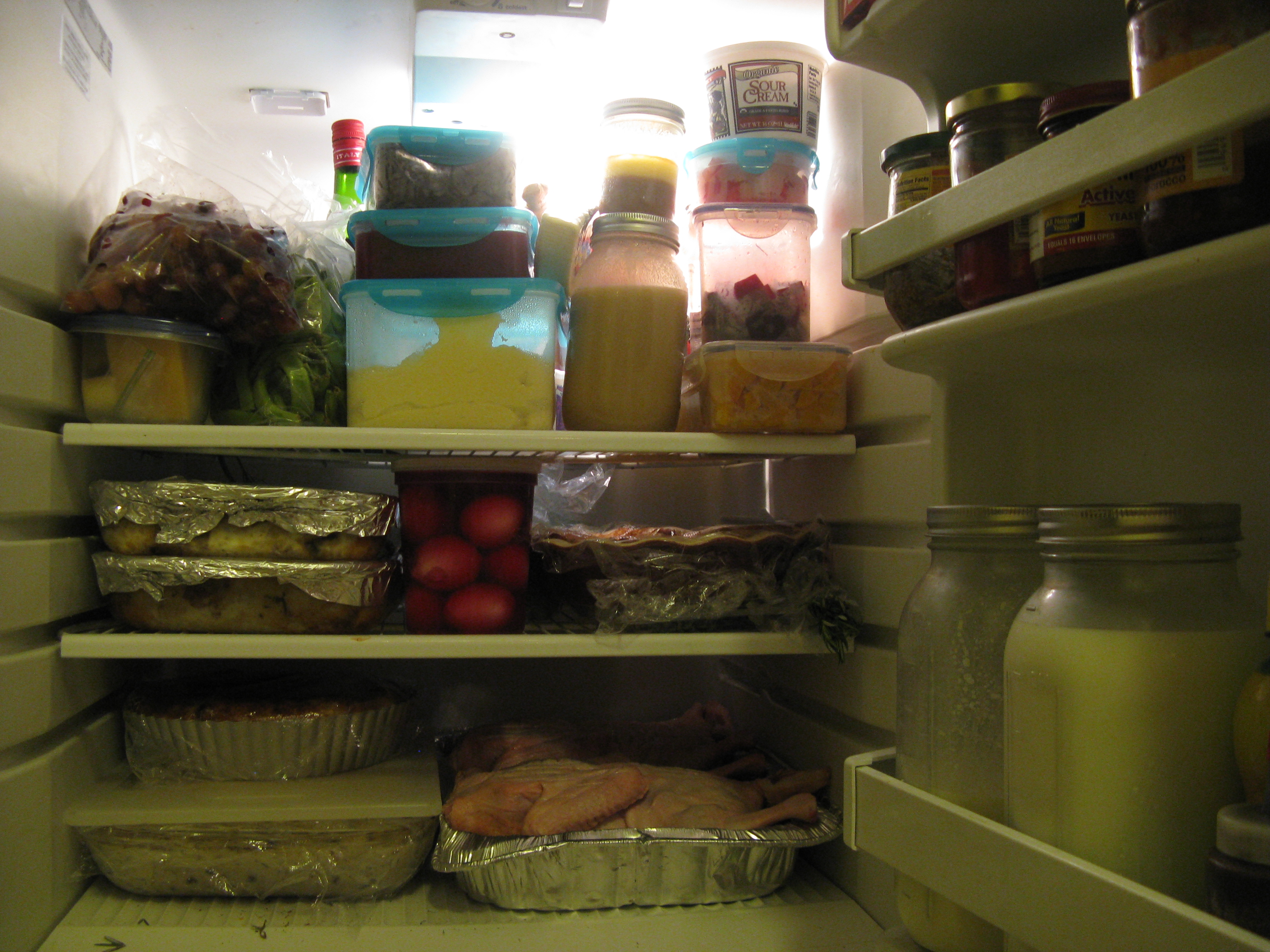
Still, there were a couple moments, like when I was saving a PDF copy of the menu to print on cardstock, or churning the second of a trio of ice creams, or playing Tetris with a cascade of jars and tupperware on the top shelf of our refrigerator, when I thought--OK, this might be a little gratuitous.  Twenty-four separate recipes.  Maybe we'll cut that down to eighteen next year.  Or thirteen for '13.  Who knows?  Anyway, my recipe post from last year was actually quite a help in planning, so I thought I'd do another one.  Regardless of how many dishes come out of the kitchen, I'm sure that I'll be glad to have this around.  Maybe you will too.

--

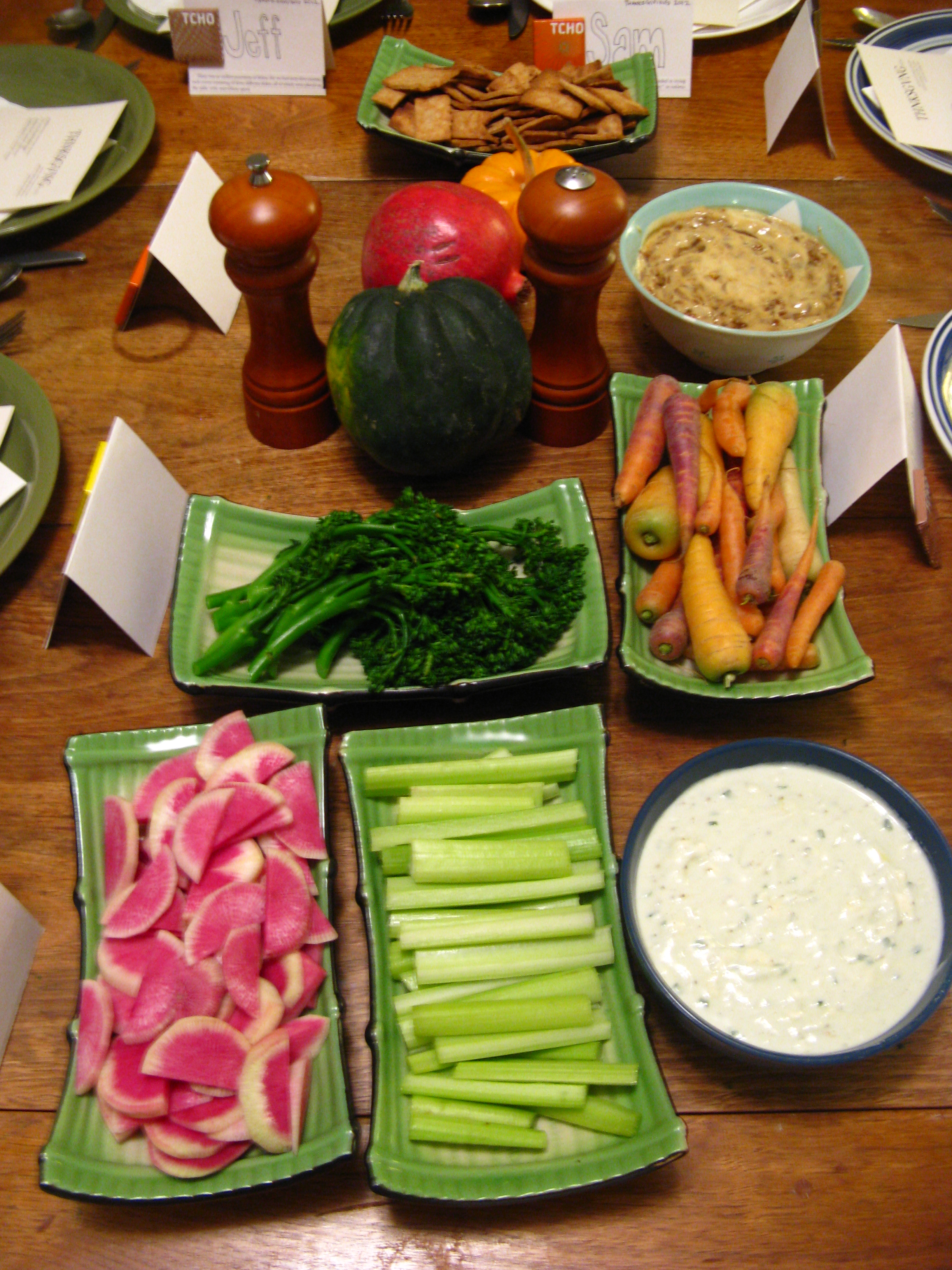
Crudites included lightly cooked broccolini, watermelon radishes, colorful carrots, and celery, served with french onion dip (2/3 cup mayo, 1/3 cup sour cream, 4 deeply caramelized onions) and bleu cheese dip (1/3 cup mayo, 2/3 cup sour cream, crumbled bleu cheese, chives, and black pepper).


Chicken liver mousse, recipe from Frances, was served with apple butter from last year (don't tell anyone--apparently 17 pounds lasts longer than I thought) and some of Heidi's oatmeal crackers rolled out to thickness 6.  Making crackers is never, never as simple of an undertaking as you think it's going to be when you get started.  Don't let anybody ever tell you that it's easy.

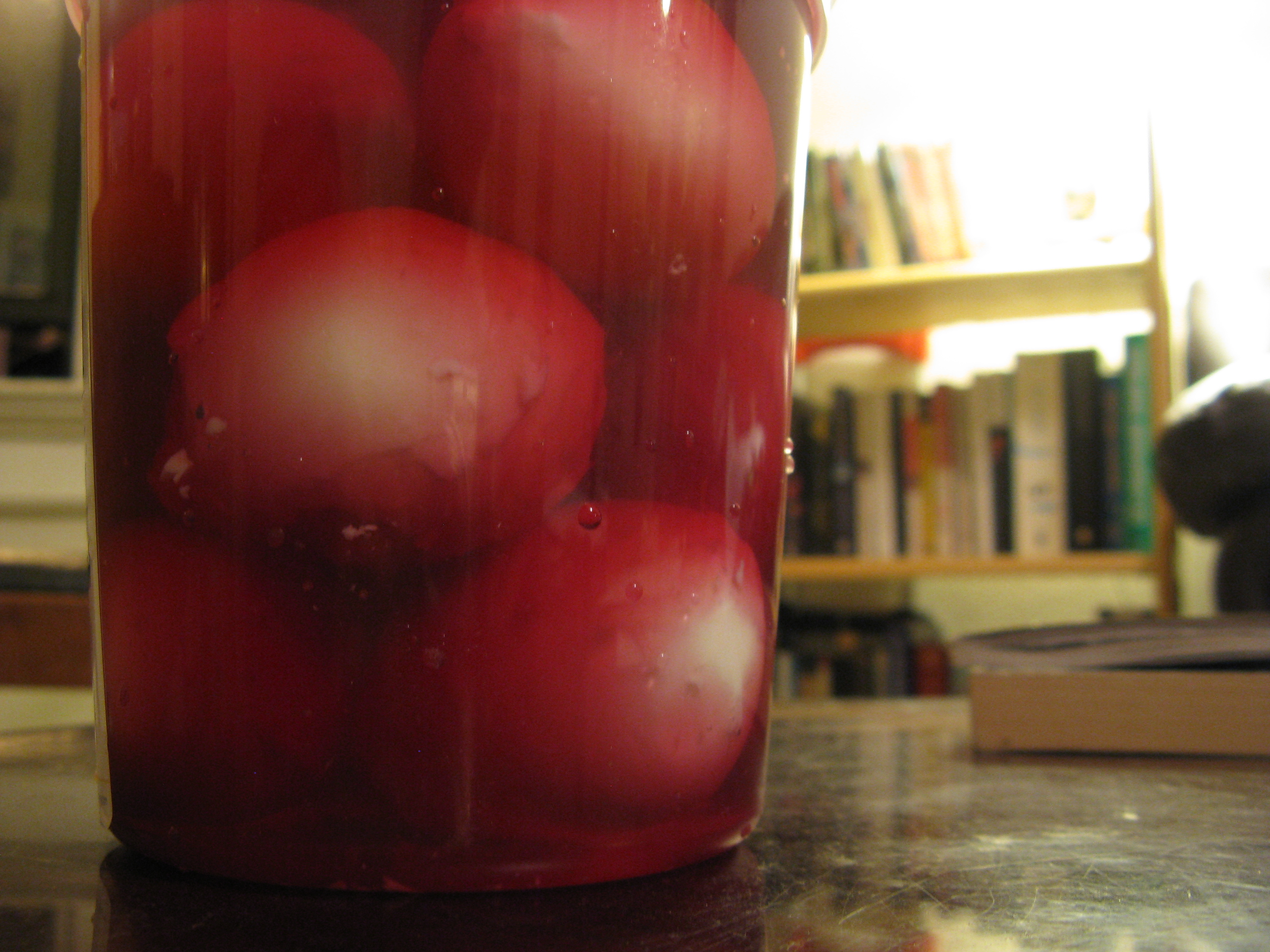
Beet-pickled eggs weren't originally going to be on the menu, but after a request from my friend Greg, who tweets about #color every other day, I decided to bring them out again.  And it's fine, because hard-boiling eggs is something that I could stand to be better at doing, anyway.  I had to sacrifice a few to test doneness, but the lucky survivors weren't too hard to peel or pickle (2/3 red beet cooking liquid, 1/3 white vinegar, salt and sugar to taste).


Somehow I got attached to the idea of serving guests cocktails as soon as they walked in the door, and boulevardiers are my new favorite cocktail.  It's 2 parts rye whiskey, 1 part Campari, and 1 part sweet vermouth.  I learned from Serious Eats that to make a cocktail for a crowd, you can make up 1/4 of the total volume with water, then stick it in the freezer to chill (don't forget to remove it before serving, to prevent ice chips).  So I came up with 24 oz rye, 12 oz Campari, 12 oz vermouth, and 16 oz water.  I can do math!

Roast duck was roasted according to this method, and was a big hit, although I thought the breast meat came out a little overcooked.  If I did it again, I might remove one of the breast-side-up roastings, or try an even lower temperature.  There's a dozen ways to roast a duck on the internet, but I was too lazy to stage a dip into boiling water.  This method did seem to cut down on splattering fat, and crisped up the skin nicely.

Cranberry sauce was a 12-ounce bag of cranberries, a cup of sugar, the zest and juice of an orange, a one-inch piece of ginger, two cinnamon sticks, and five pods of star anise.  Remember how many whole spices you put in, so you can fish them out later.

I think everyone who knows me knows that I have a special fondness for mashed potatoes, which grew even fonder this year thanks to the food mill that Sam's Mom bought me after reading the linked blog entry.  Unlike last year, I didn't have to spend 90 minutes pushing them through a strainer--more like 90 seconds cranking them through the grating.  So that was about 60 times more pleasant.  To reheat, Jeff and I tag-teamed them in the microwave, which worked really well.  I probably didn't even need to add the last cup of cream.  I probably did need to make more than five pounds, because there weren't any left over.

Leek bread pudding, just like last year, was from Ad Hoc At Home, as adapted here.  We made it two days in advance, covered it in duck drippings, and baked again at 350 to heat through before serving.  Marvelous.

Cauliflower gratin is Jeff's thing, from Martha's recipe, with three different colors of cauliflower, parmesan cheese, and chestnuts.  Also, six cups of cream.  Shockingly, it is delicious.

Last year I went to the extra trouble of blanching my brussels sprouts before tossing them in a hot oven to finish, but the water trapped between the leaves gave a kind of mushy result with a broken sauce.  This year, I just made a miso brown butter (8 tbsp butter, browned, and 2 tbsp miso).  As soon as the ducks came out of the oven, I tossed about 2 1/2 pounds of halved brussels sprouts with this melted butter in a cast-iron skillet and stuck it under the broiler.  I gave it a shake every few minutes, and after 6-10 minutes, the sprouts had just a bit of char, and were glazed perfectly with the butter.  This is it.


A few pounds of multicolored carrots were tossed with duck fat, salt, and a sprinkle of powdered cumin, then roasted until tender.  I toasted about a cup of uncooked wild rice in a little extra duck fat and then boiled it, with a sprig of thyme.  Then I mixed the rice and carrots together with some chopped dates and cumin seeds.  To serve, I warmed it through in a 350-degree oven.  It's based on a dish from the Eleven Madison Park cookbook.  It didn't come with a meyer lemon puree or a complimentary clambake, but it was quite good, and I was proud of the adaptation.

I love the recipe for glazed romano beans with mint from Ad Hoc At Home, especially with a handful of roasted pumpkin seeds tossed in, but the timing is just a little bit tricky as part of a large meal.  The buttery glaze doesn't keep well at all, so you have to whip it up five minutes before you serve.  If you heat the romano beans in it too long, they won't be green.  If you don't heat them enough, the butter will congeal on them.  This might not make the cut again.

Fennel is one of my favorite flavors in the world, and I wanted a raw vegetable to cut the richness of the rest of the meal, so I sliced two bulbs very thin and tossed them with the zest of juice and a lemon and a little salt.  Just before serving, I minced a handful of parsley leaves and tossed those in too.

Jeff had gotten dozens upon dozens of beets in his most recent farmbag, and I already had to make up a red pickling liquid, so I decided to also make a beet salad.  I boiled some red, yellow, and pink chiogga beets in separate pots of water, cubed them, and kept them separate until dinner.  Then Jeff tossed them with some apple cider vinegar, minced horseradish, and a few handfuls of arugula.  Though kind of an afterthought in my dinner plan, it came out just right, and it was another refreshing dish amidst the (literal) quarts of cream on the table.


I made some cornbread from Ina Garten's Barefoot Contessa at Home, and holy crap is that a good recipe.  The recipe calls for hot peppers and scallions, and just because I knew Jeffrey would approve,  I chopped up 8 oz of cream cheese and added that to the batter too.  Luckily, it was sitting in a weird place, so nobody took seconds, and I had it for breakfast through Tuesday.

This roasted fruit crostata is one of my favorites and makes an appearance every holiday.  I double the quantity of fruit, just so it's not too crusty.

I did make up an extra half-batch of crust from the crostata and use it as the base for Paula Deen's sweet potato pie.  It was good, but to my palate it was eclipsed by a butternut squash pie that my friend Chelsea brought, which was even more packed with deep vegetable flavor.  Anyway, they were both better than pumpkin pie.

I made some fruit salad from six persimmons, a red and a yellow grapefruit, and a big pomegranate.  Just before serving, I tossed a few spoonfuls of vanilla sugar over the top and mixed it up.  The best part was that all the fruit could be cut up in advance, with no danger of oxidizing and turning brown.  The last thing you want to do is take a knife to pare a pear after a few glasses of pinot noir.


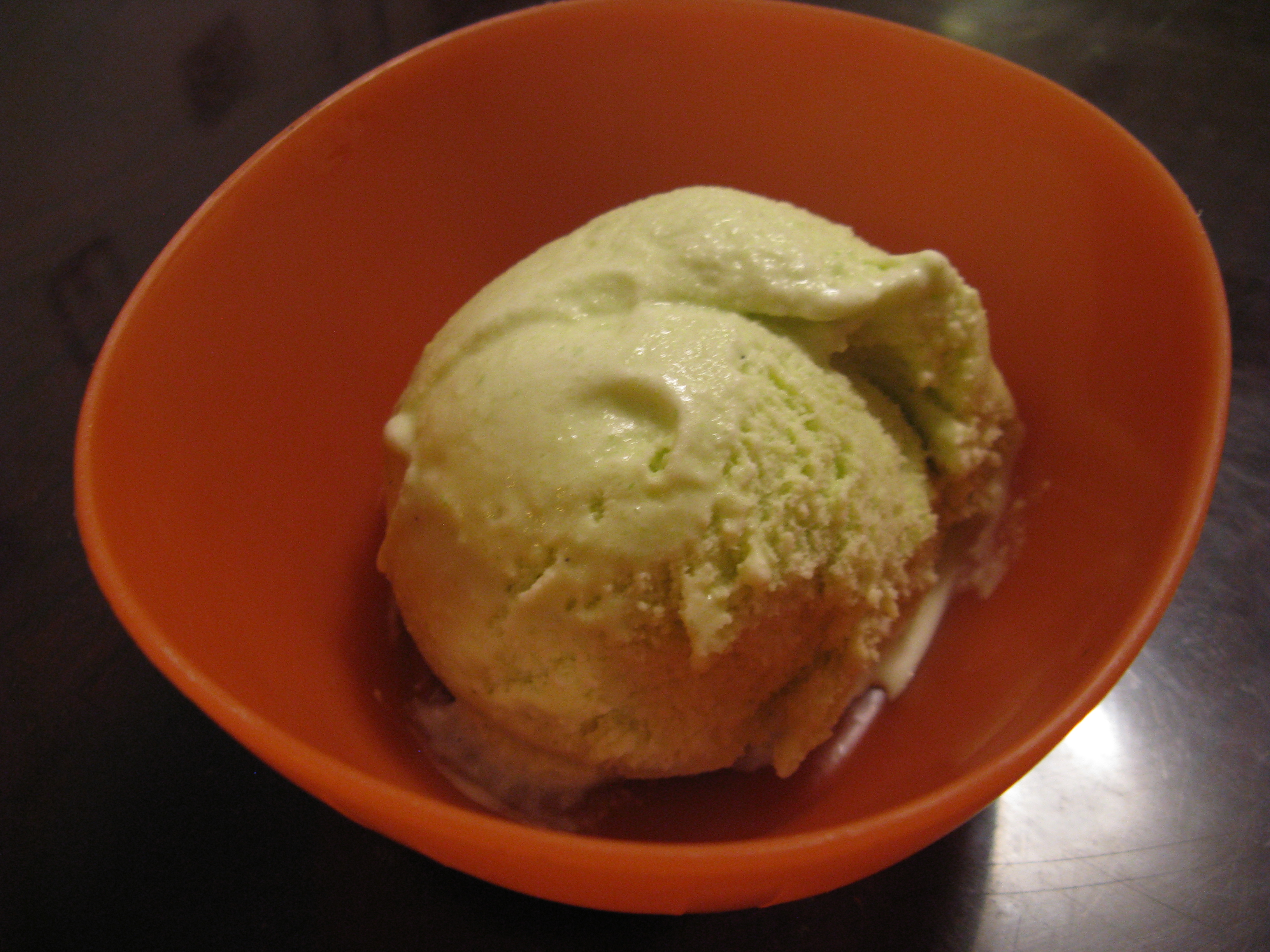
And that brings us to ice creams, three different ones, all inspired by The Perfect Scoop by David Lebovitz.  I made peanut butter rosemary by steeping three big sprigs of rosemary in cream before making his peanut butter ice cream recipe.  Cinnamon was by-the-book, but I found it a bit lacking in spice up-front, so I added in a few teaspoons of powdered cinnamon to the base.  And celery vanilla was his recipe for green pea ice cream, with celery instead of peas, and some vanilla steeped into the cream.  I blanched and pureed all the green parts from a bunch of celery so the final ice cream was green, and I steeped the rest of the bunch in the cream to enhance the celery flavor.  I think about three bites were eaten in total, but I still love her.

Sunday, November 4, 2012

Bring on the roasted tomatoes

Jeff has been getting an awful lot of Early Girl tomatoes in his farm bag recently.  I'm convinced that this fruit must be misnamed if we're still getting pounds and pounds of them in November, since I thought tomato season ended about a month ago with the autumnal equinox.  Maybe I'm totally off-base here, and the moniker doesn't refer to the ripening period and presumed gender of the tomatoes.  Maybe they were first grown by amateur botanists Evelyn Early and Johann von Girl.  The world may never know.


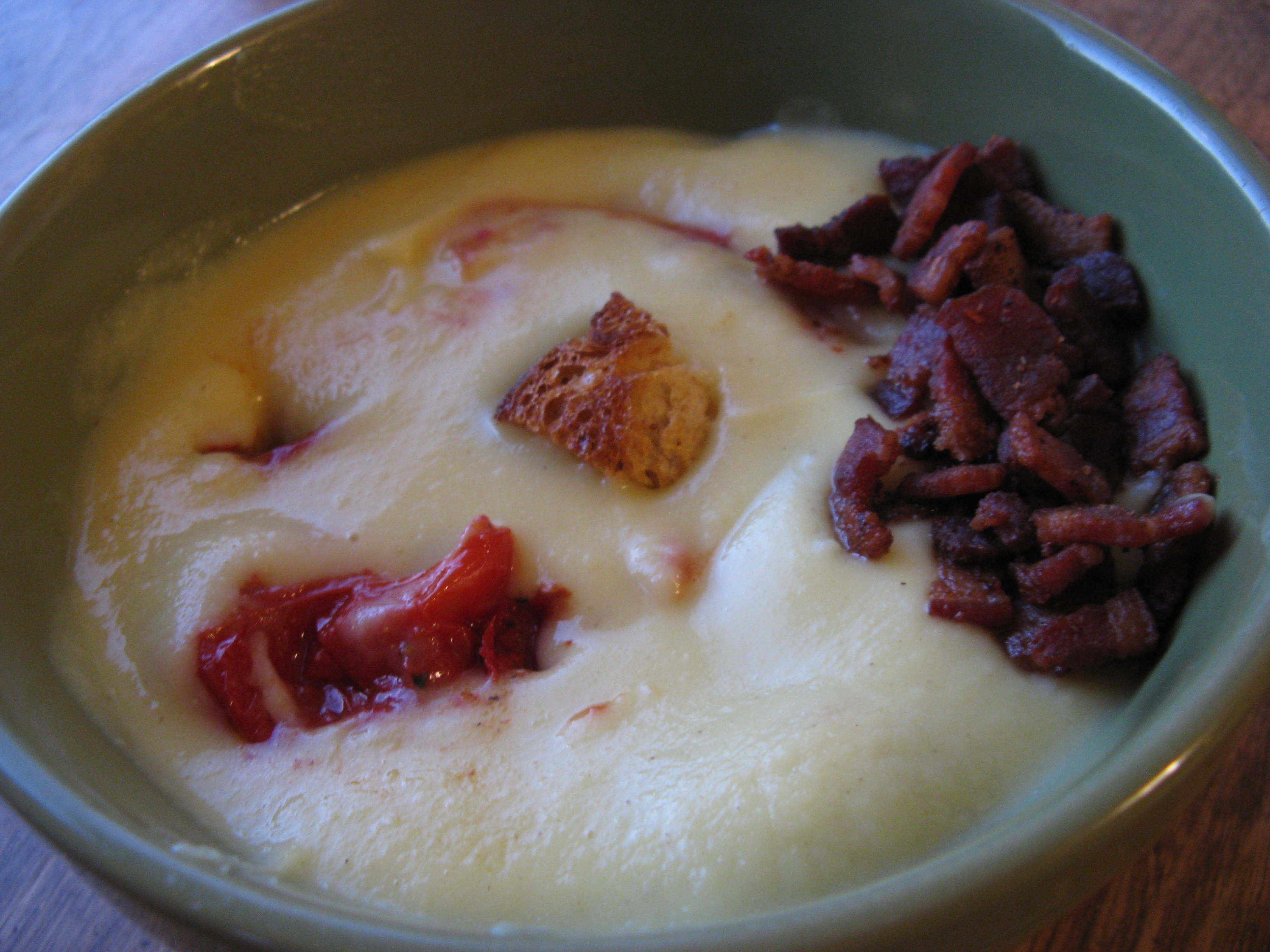
There's no mistaking these late early girls for tomatoes from the height of summer; their texture is just a little too fragile, too mealy to be enjoyed raw.  As a result, I've recently discovered the immense joy of oven-roasted tomatoes, and regretted all the years of my adult life spent composing precious little raw tomato salads out of Downton Abbey.  A few pinches of salt, a drizzle of oil, a grind of black pepper, maybe some herbs or some balsamic vinegar to set off the sweetness.  I've had them mixed into scrambled eggs, stuffed into a squash, in the middle of a sandwich, on top of velvety parsnip soup with bacon.  There's just about nothing they can't do.  They're worldly tomatoes.


They found their way into a soup on Saturday night, along with some of Mariquita Farms' red peppers, always stunning in their crisp, concentrated flavor.  I started making preparations for the soup without a real end goal in mind, not sure if I'd need to adjust the pureed vegetables with a cup of water to thin out the texture, or a splash of cream to deepen the flavors.  It's hard to go wrong with produce and a blender, but there are a lot different directions a tomato soup can take once you start.To my surprise, a trip through my (too often neglected) food mill was all that the soup needed.  I've never been one to let a lily go ungilded, so I had Jeff whip up a herb-infused cream to dollop on top.  

I really dig Jeff's farm bag.  Once again, it convinced me to come up with an autumnal application for a piece of summer produce that I had otherwise stopped buying months ago.  At this rate, I'm looking forward to enjoying this soup again once the late-blooming tomatoes start coming in next February.

--

Roasted tomato and red pepper soup with herb whipped cream
serves 2-3

10 early girl tomatoes (about 2 lb)
1 tbsp balsamic vinegar
3 sprigs thyme
4 medium (4-to-6-inch) red peppers
a small, hot pepper (like a jalapeƱo), seeds removed and sliced thin
3 small sweet onions (about 1 1/2 cup), sliced thin
3 cloves garlic, peeled and minced
olive oil
kosher salt
black pepper

1/2 cup heavy cream
8-10 leaves basil
15-20 leaves oregano

Heat the oven to 400 F.  Cut the tomatoes in half and place them, cut-side up, on a baking sheet lined with aluminum foil.  Sprinkle the tomatoes with 4-5 big pinches of salt and a few grinds of black pepper, then place the thyme sprigs on top.  Sprinkle the balsamic vinegar and 3 tbsp olive oil over the herbs and tomatoes.  Roast in the oven until the tomatoes start to lose their shape, perhaps browning and caramelizing in places (depending on how sweet they are), about 20-30 minutes.

Meanwhile, blacken the red peppers.  If you have a gas stove, you can do this by placing the peppers directly on the gas burner and cooking them in the gas flame, turning them until they're blackened on all sides.  If you have an electric stove, you can rub them with a little peanut oil and broil them until they're blackened on one side, then turning them and roasting the other side.  While the peppers are still warm, place them in a large bowl and cover with a few kitchen towels or some plastic wrap.  Let the warm peppers steam in the bowl for 10 minutes, then peel away blackened exterior.  Remove the seeds (you can do this easily under running water), and tear the peppers into rough chunks.

Add the thinly-sliced onions to a large pot with 3-4 tbsp olive oil and a few pinches of salt, and cook over medium heat until the onions are golden and suffused with the oil, but not at all browned, about 5 minutes.  Add the garlic and sliced hot pepper, reduce the heat to low, and cook for another 5 minutes.

To the pot containing the onion mixture, add the red pepper chunks and roasted tomatoes, along with any of their accumulated juices.  Blend until mostly smooth, and then pass through a fine-mesh strainer or a food mill.  If the finished soup is a little thick, whisk in a few ounces of water or olive oil.  Keep the soup warm over low heat.

Add the cream to the bowl of a mixer and whip on the highest speed, just until it's taken up some air and starts to become glossy.  Stack the leaves of basil and cut into thin strips, then do the same for the oregano.  Mix the herbs gently into the whipped cream, along with a few grinds of black pepper.

Serve the tomato soup warm, garnished with the herbed whipped cream, along with some toast, or grilled cheese.